If you’re here, you’re probably in the market for a plastic bucket crate injection molding machine—whether you’re a small startup scaling up your crate production or a existing facility looking to replace your old, finicky machine. Let me cut to the chase: comparing different brands of these machines isn’t just about looking at price tags. As someone who’s been in the game for years, selling these machines day in and day out, I’ve seen way too many buyers make the mistake of chasing the lowest upfront cost only to sink way more into repairs and downtime a year later. So today, I’m breaking down the real, actionable stuff you need to look for when vetting different brands—no corporate jargon, just what actually matters for your bottom line. Plastic Bucket Crate Injection Molding Machine
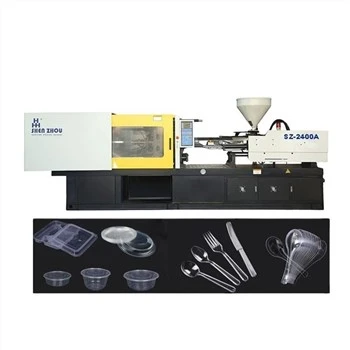
First off, let’s get clear on what a bucket crate machine does, because it’s not a one-size-fits-all tool. Bucket crates (you know, the ones that hold 5-gallon paint buckets, produce crates for dairy farms, or storage crates for hardware stores) have specific needs. They need consistent wall thickness, no warping, and enough cycle speed to keep up with demand without sacrificing quality. So when you’re comparing brands, start with the core specs that tie directly to your crate’s design, not just generic “machine power” numbers.
Let’s talk about clamping force first—this is non-negotiable for crates. Clamping force is what keeps the mold closed when you inject molten plastic, right? If a brand’s ad says “100-ton clamping force” but your crates are extra large (like 20-inch square produce crates) or have deep, complex molded handles, that 100-ton might be way too weak. Wait, no—let me correct that: underpowered clamping force leads to flash, that thin, extra plastic edge you have to trim off every single crate. Trimming flash not only adds labor time (which is money out your pocket) but also wastes plastic material. I’ve had a buyer come to me last year who bought a machine from a no-name brand because it was $5k cheaper, and their flash rate was 15%—meaning 15 out of every 100 crates needed extra work, and they were throwing out 2 pallets of plastic a week just from flash. That $5k “savings” cost them over $20k in labor and material in 6 months. So when comparing brands, don’t just look at the tonnage—ask the brand to confirm that tonnage is rated for the mold size you need, and for the specific plastic you’re using (most crates use HDPE, but some use PP, which has different melt properties).
Next, injection capacity. This is how much molten plastic the machine can inject in one cycle. Bucket crates aren’t tiny parts, so if a brand’s machine has a small injection unit, you’ll have to run multiple shots to make one crate, which slows down cycle time. Or if you try to force a larger crate into a machine with too small an injection unit, you’ll get short shots—gaps in the crate’s walls that make it weak and prone to breaking. A trick I use with buyers: if your typical crate is around 5 lbs of raw material, the machine’s injection capacity should be at least 10% larger than that. So when you’re comparing brands, ask for their machine’s “shot size” in kilograms or pounds, and match it to your largest crate. Also, check the injection speed—faster injection is good, but not if it’s inconsistent. A brand that has variable speed control (meaning it slows down when it’s injecting thin walls and speeds up for thicker sections) will make much more uniform crates with less warping. Warping is another big one—if your crates bend after cooling, they’re useless for stacking or shipping.
Now, let’s shift from hard specs to the stuff that affects your daily operation: machine reliability and support. This is where brands differ a lot, and it’s the part that most buyers overlook. First, ask about the brand’s uptime rate. Reputable brands publish their average uptime (how many hours a week the machine runs without needing repairs) while cheap no-name brands might not even track that, or their uptime is 60% max. Why does uptime matter? If your machine is down for 8 hours a week, that’s 32 hours a month you’re not producing crates—lost revenue, delayed orders, and unhappy customers. I had a repeat buyer who switched from a mid-tier brand to our machines a couple years back because their old machine was down 12 hours a week for broken hydraulics. After switching, their uptime went to 95%, and they were able to add 2 extra production runs a week without buying a second machine.
Then there’s after-sales support. Let’s be real—even the best machines break sometimes. What matters is how fast you can get parts and tech support. Some brands outsource their parts, meaning you have to wait 2 weeks for a simple valve, while others keep a local parts stock and can ship a replacement the same day. Tech support is another thing: can you call a real person at 2am if your machine goes down during a night shift, or do you have to wait for a technician to get to your facility in 3 days? I always tell buyers to ask brands for their average response time for emergency service. Also, check if the brand offers training. If your operators have never run an injection molding machine, a brand that provides free on-site training (or at least affordable online training) will save you a ton of headaches down the line. I’ve seen buyers skip training, then break their machines because they ran a cycle with the wrong mold settings—costing them thousands in repairs.
Wait, don’t forget mold compatibility. Crate molds are custom, right? Some brands’ machines only work with molds they sell, which means you’re stuck paying their marked-up mold prices. Other brands are mold-agnostic, so you can use your existing mold (if you’re replacing an old machine) or shop around for a cheaper mold from a third-party supplier. That’s a huge cost saver. For example, if you have a $10k mold for your 5-gallon bucket crates, a brand that only works with their own molds would force you to buy a new $15k mold, while a brand that’s mold-compatible would let you keep your existing one. That’s $5k back in your pocket before you even run your first production.
Also, energy efficiency. Injection molding machines use a lot of electricity, especially when running 24/7. Old hydraulic machines (the ones that were popular 10 years ago) are super energy-hungry—they waste energy just keeping the hydraulics running even when the machine is idle. Newer servo-driven machines are way more efficient—they only use energy when they’re actually moving parts. When comparing brands, ask about the machine’s energy consumption per cycle. A servo machine might cost $2k more upfront, but over 5 years, you’ll save $8k or more on electricity bills. I had a buyer who switched to a servo machine from our line, and their monthly electric bill dropped by $300— that’s $3,600 a year in their pocket. For a small business, that’s enough to cover a part-time employee’s salary or buy new molds for a different crate size.
Now, let’s talk about hidden costs. This is where a lot of brand comparisons go wrong. Upfront price is just the start. Some brands will quote you a low price, but then charge extra for installation, tooling accessories (like mold clamps, temperature controllers, or safety guards), or even basic training. When you’re vetting a brand, ask for a full, all-inclusive quote. No hidden fees. For example, a brand might quote $40k for a machine, but add $5k for installation, $1k for safety guards, and $2k for training—total $48k. Another brand might quote $45k all-in. The first one seems cheaper, but the second has a higher quality machine and includes support, so the total cost of ownership is actually lower.
Wait, let’s not overlook build quality. Take a close look at the machine’s frame and components. Is the frame made from thick, cast steel (which is durable) or thin welded steel (which will warp over time)? Are the bearings and screws from a reputable brand (like SKF or Timken) or a cheap, unbranded part that will wear out in 6 months? I’ve seen machines from no-name brands that shake so bad during cycles that they crack the mold—meaning you have to replace the mold a year early, which is a $10k mistake. When you’re comparing brands, ask what components they use, and do a quick check on those components’ reputations. A brand that uses top-tier components might be $3k more expensive, but the machine will last twice as long.
Also, scalability. If you’re planning to grow your business in the next 3-5 years, you don’t want to buy a machine that you’ll outgrow in a year. Look for brands that let you upgrade your machine later—like adding a robotic arm for part removal, or a larger injection unit for bigger crates. Some brands offer modular upgrades, so you don’t have to buy a whole new machine when your production needs grow. For example, a buyer who started with a 150-ton machine last year might need a 200-ton machine next year. A brand that lets them upgrade their existing machine instead of selling them a new one saves them a lot of money.
Now, how do you actually verify all this? A lot of brands will say they have great support, but you need to check real feedback. Look for independent reviews (not just testimonials on the brand’s website—those are usually paid for). Check industry forums, or ask the brand for references from other bucket crate manufacturers who use their machines. Call those references and ask specific questions: “How often does the machine break down?” “How fast do they respond when you need a part?” “Did the all-inclusive quote stay the same, or were there hidden fees?” I always tell buyers to talk to at least 3 references before making a decision—one good reference is worth more than any sales pitch.
Wait, let’s address the elephant in the room: budget. I get it, you have a budget. But don’t let budget be the only deciding factor. A $30k machine from a no-name brand that breaks every 2 months is way more expensive than a $45k machine from a reputable brand that runs 95% uptime. I’ve seen too many buyers stretch their budget for a cheap machine, then end up having to spend more to fix it, or even replace it within 2 years. That’s a lose-lose. The sweet spot is finding a brand that matches your production needs, has good support, and fits your budget. It doesn’t have to be the most expensive brand, but it also shouldn’t be the cheapest.
Let me wrap this up with a quick checklist you can use when comparing brands:
- Match clamping force and shot size to your largest crate (no underpowered machines)
- Ask for uptime rates and average emergency service response time
- Get an all-inclusive quote (no hidden fees)
- Check if the machine is compatible with your existing molds (or third-party molds)
- Verify build quality components and energy efficiency
- Talk to 3+ independent references
- Make sure the brand offers scalability for future growth

At the end of the day, choosing a bucket crate injection molding machine is a big investment for your business. You don’t want to make a decision based on a 10-minute sales pitch or a fancy ad. Take the time to compare these factors, and you’ll avoid the mistakes that so many buyers make.
Plastic Bucket Crate Injection Molding Machine If you’re ready to stop guessing and talk through your specific needs—whether you make small storage crates, 5-gallon bucket crates, or something else—reach out. We can walk through your production goals, answer any questions you have about specs or support, and help you find a machine that works for your bottom line, not just your upfront budget. Don’t let a bad machine slow you down—let’s make sure your production runs smoothly, with minimal downtime and maximum quality.
References
- Injection Molding Machine Reliability and Uptime Standards, Industrial Machinery Association, 2022
- Energy Efficiency Guidelines for Hydraulic and Servo-Driven Injection Molding Machines, Plastics Industry Association, 2021
- Cost of Flash and Defects in Plastic Crate Manufacturing, Journal of Industrial Plastics, 2020
- Mold Compatibility and Scalability for Custom Injection Molding Equipment, Manufacturing Engineering Journal, 2023
Shenzhou Machinery Co., Ltd.
As one of the most professional plastic bucket crate injection molding machine manufacturers and suppliers in China, we’re featured by quality products and good price. Please feel free to buy advanced plastic bucket crate injection molding machine made in China here from our factory. We also accept customized orders.
Address: Fenghuang Town, Zhangjiagang City, Jiangsu Province, P.R.China
E-mail: sale@shenzhoumac.com
WebSite: https://www.shen-zhoumachinery.com/
