Hey there! As a supplier of Fisher Ball Valves, I often get asked about the connection types of these awesome valves. So, I thought I’d put together this post to break it all down and give you the lowdown on what you need to know. Fisher Ball Valve

First off, Fisher Ball Valves are known for their high – quality, reliability, and performance. They’re used in a wide range of industries, from oil and gas to chemical processing, power generation, and more. And getting the right connection type is super important because it affects how well the valve fits into your system and how smoothly it operates.
Let’s start with the two main categories of connection types: flanged connections and threaded connections.
Flanged Connections
Flanged connections are probably the most common type you’ll see, especially in larger – scale industrial applications. They’re strong, reliable, and can handle high pressures and temperatures.
A flange is basically a flat, circular disc that’s bolted onto the valve body and then connected to a matching flange on the pipeline. There are different types of flanges, such as raised face (RF) and flat face (FF).
Raised Face (RF) Flanges
Raised face flanges have a raised surface around the bore of the flange. This raised part helps to create a better seal when the bolts are tightened. The gasket is placed between the raised faces of the two flanges, and as the bolts are torqued down, the gasket gets compressed, creating a tight, leak – proof connection. RF flanges are great for applications where you need to prevent leaks, especially in high – pressure systems. For example, in an oil refinery, where there are large pipelines carrying volatile substances under high pressure, RF – connected Fisher Ball Valves are a go – to choice.
Flat Face (FF) Flanges
Flat face flanges, on the other hand, have a completely flat surface. They’re commonly used in low – pressure applications or in systems where the pipeline and valve are made of materials that are prone to damage. The flat surface provides a large contact area for the gasket, but they’re not as good at handling high pressures as RF flanges. If you’re working on a small – scale chemical plant with relatively low – pressure pipes, FF – connected Fisher Ball Valves might be a suitable option.
There are also different flange standards, like ANSI (American National Standards Institute) and DIN (Deutsches Institut für Normung). ANSI flanges are more commonly used in North America, while DIN flanges are popular in Europe. It’s crucial to choose the right standard for your application and the region where your system is located. As a supplier, I always make sure to help my customers select the appropriate flange standard based on their needs.
Threaded Connections
Threaded connections are another option for Fisher Ball Valves. They’re typically used in smaller – sized valves and in applications where the installation is relatively simple and doesn’t require heavy – duty bolting.
There are two main types of threaded connections: NPT (National Pipe Taper) and BSP (British Standard Pipe).
NPT Threads
NPT threads are the most common type of threaded connection in the United States. They’re tapered threads, which means the diameter of the thread gets smaller as you move along the length of the pipe or valve. This taper helps to create a tight seal as the threads are screwed together. The threads are also cut with a specific pitch and angle, which ensures proper mating between the valve and the pipeline. NPT – connected Fisher Ball Valves are often used in plumbing systems, small – scale industrial setups, and even in some gas applications.
BSP Threads
BSP threads are a standard used mainly in the UK and other Commonwealth countries. There are two subtypes of BSP threads: BSPP (British Standard Pipe Parallel) and BSPT (British Standard Pipe Taper). BSPP threads are parallel, while BSPT threads are tapered. BSP – connected Fisher Ball Valves are a good choice if you’re working on projects in regions that follow the British standards.
Other Connection Types
Apart from flanged and threaded connections, there are also some other less – common but still important connection options for Fisher Ball Valves.
Welded Connections
Welded connections involve directly welding the valve to the pipeline. This creates a very strong and permanent connection. Welded – type Fisher Ball Valves are often used in high – integrity applications where leakage is absolutely not an option, such as in nuclear power plants or in high – pressure gas pipelines. The welding process needs to be done carefully by trained professionals to ensure the quality of the connection.
Socket Weld Connections
Socket weld connections are a type of welded connection where the valve has a socket – like end that the pipe fits into. The joint is then welded around the circumference. Socket weld – connected Fisher Ball Valves are commonly used in small – diameter pipes and in applications where you need a compact and robust connection.
Choosing the Right Connection Type
So, how do you choose the right connection type for your Fisher Ball Valve? Well, there are a few factors to consider.
First, think about the pressure and temperature requirements of your system. If you have high – pressure and high – temperature conditions, flanged or welded connections are usually the better choice. For low – pressure and low – temperature applications, threaded connections might be sufficient.
The size of the pipeline also matters. Larger pipelines typically use flanged connections, while smaller ones can use threaded or socket weld connections.
Another factor is the location of your project. If you’re working in a region with specific industry standards (like ANSI in North America or DIN in Europe), make sure to choose a connection type that complies with those standards.
And of course, ease of installation and maintenance is important. Threaded connections are generally easier to install and remove compared to welded connections, which require special equipment and skills for installation and repair.
As a supplier of Fisher Ball Valves, I’m always here to help you make the right choice. I’ve got years of experience in the industry, and I know how to match the connection type to your specific needs. Whether you’re working on a big – scale industrial project or a small – personal DIY job, I can provide you with the right valve and the right connection type.
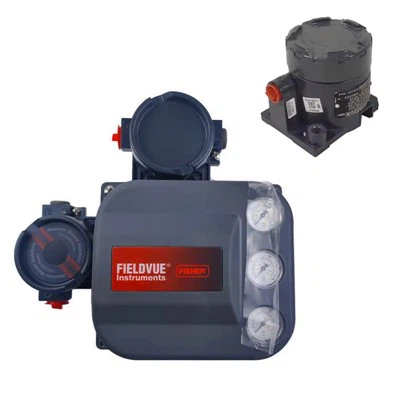
Fisher Valve Positioner If you’re in the market for Fisher Ball Valves and are not sure which connection type is best for you, don’t hesitate to reach out. We can have a chat about your requirements, and I’ll do my best to guide you through the selection process. I’m committed to providing top – quality products and excellent customer service. So, if you’re thinking about making a purchase, let’s have a talk and see how we can work together.
References
- "Valve Handbook: Principles and Applications"
- "Piping and Pipeline Engineering: Design, Construction, Maintenance, Integrity, and Repair"
Century Weiye (Dalian) Control Equipment Co., Ltd.
As one of the leading fisher ball valve manufacturers and suppliers in China, we warmly welcome you to buy discount fisher ball valve in stock here from our factory. If you have any enquiry about quotation, please feel free to email us. Quality products and reasonable price are available.
Address: 2205, Building 8, Red Star International, Ganjingzi District, Dalian City, Liaoning Province
E-mail: serena@valvesjwy.com
WebSite: https://www.valve-sjwy.com/
