Hey there! I’m a supplier of Marine Non – Destructive Testing Equipment, and today I wanna talk about the principle behind eddy current testing equipment for marine purposes. Marine Non-Destructive Testing Equipment

What are Eddy Currents?
First off, let’s get the basics down. Eddy currents are basically loops of electrical current induced within conductors when they’re exposed to a changing magnetic field. It’s like when you’re moving a magnet around a piece of metal. The changing magnetic field makes these little circular currents flow inside the metal.
In the marine world, we deal with a lot of metal components. Ships are made up of steel hulls, propellers, and various other metal parts. These parts are constantly exposed to harsh environments, like saltwater, which can cause corrosion and other types of damage. That’s where eddy current testing comes in.
How Eddy Current Testing Works
The eddy current testing equipment we supply has a probe. This probe contains a coil. When an alternating current is passed through this coil, it creates an alternating magnetic field. When this probe is brought close to a conductive material (like the metal parts on a ship), the alternating magnetic field induces eddy currents in the material.
Now, these eddy currents create their own magnetic field, which opposes the original magnetic field from the probe. The testing equipment measures the changes in the impedance of the coil in the probe. If there’s a defect in the material, like a crack or corrosion, it disrupts the flow of the eddy currents. This disruption causes a change in the impedance of the coil, and the equipment can detect this change.
Let’s say there’s a small crack in a ship’s propeller. When the eddy current probe passes over the crack, the eddy currents can’t flow smoothly through the crack. This changes the magnetic field created by the eddy currents, and in turn, changes the impedance of the probe’s coil. The equipment then shows this as a signal on its display, indicating the presence of a defect.
Advantages of Eddy Current Testing for Marine Applications
One of the big advantages of using eddy current testing in the marine industry is its high sensitivity. It can detect very small defects, even those that are not visible to the naked eye. This is crucial for ensuring the safety and reliability of marine vessels.
Another advantage is that it’s a non – contact method. You don’t have to touch the surface of the material being tested. This is really useful when dealing with hard – to – reach areas or materials that are sensitive to physical contact. For example, on a ship’s hull, there might be areas that are difficult to access. With eddy current testing, you can just hold the probe near the surface and get accurate results.
It’s also a fast method. You can quickly scan large areas of a ship’s components. This is important because in the marine industry, time is money. The faster you can test the components, the less downtime the ship has.
Limitations of Eddy Current Testing
Of course, no testing method is perfect. Eddy current testing has some limitations. One of the main limitations is that it can only be used on conductive materials. Most metals are conductive, but if you have non – conductive materials on a ship, like some types of plastics or composites, eddy current testing won’t work.
Another limitation is that the depth of penetration is limited. The eddy currents are mainly concentrated near the surface of the material. So, if you’re looking for defects deep inside a thick metal component, eddy current testing might not be the best option.
Applications in the Marine Industry
Eddy current testing is used in a wide range of applications in the marine industry. For example, it’s used to inspect the hulls of ships. The hull is the most important part of a ship, and any damage to it can be very dangerous. Eddy current testing can detect corrosion, cracks, and other defects in the hull, allowing for timely repairs.
It’s also used to test propellers. Propellers are constantly in contact with water and are subject to a lot of stress. Eddy current testing can help identify any defects in the propeller blades, ensuring that the ship’s propulsion system works properly.
In addition, eddy current testing is used to inspect pipes and other metal components on ships. These components are often hidden and difficult to access, but eddy current testing can quickly and accurately detect any defects.
Our Role as a Supplier
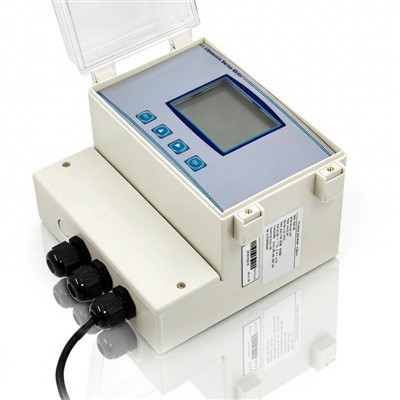
As a supplier of Marine Non – Destructive Testing Equipment, we play a crucial role in the marine industry. We provide high – quality eddy current testing equipment that is reliable and easy to use. Our equipment is designed to meet the specific needs of the marine environment.
We also offer training and support to our customers. We understand that not everyone is an expert in eddy current testing, so we provide training on how to use the equipment properly. We also offer technical support in case our customers have any problems with the equipment.
Conclusion
Eddy current testing is a powerful tool in the marine industry. It allows us to detect defects in metal components quickly and accurately, ensuring the safety and reliability of ships. While it has some limitations, its advantages far outweigh them.
Submersible Level Meter If you’re in the marine industry and are looking for reliable eddy current testing equipment, we’re here to help. We have a wide range of products to suit your needs. Whether you’re inspecting a small boat or a large cargo ship, our equipment can get the job done. Don’t hesitate to reach out to us for more information and to discuss your specific requirements. Let’s work together to keep your marine vessels in top condition.
References
- Nondestructive Testing Handbook, Volume 4: Eddy – Current Testing.
- ASNT (American Society for Nondestructive Testing) standards related to eddy current testing.
- Marine Engineering textbooks on non – destructive testing methods.
Dalian Yheng Technology Co., Ltd.
Dalian Yheng Technology Co., Ltd. is one of the leading marine non-destructive testing equipment manufacturers and suppliers in China, also supports customized service. We warmly welcome you to buy high quality marine non-destructive testing equipment in stock here from our factory. Contact us for more details.
Address: F1605, NO.10 Huoju road, High-tech Industrial Zone, Dalian, China
E-mail: admin@dlyheng.com
WebSite: https://www.yhengphmeter.com/
