If you’re working on a construction job site where concrete’s being poured, there’s a good chance you’ve seen a concrete pump truck — those big rigs with the long, extendable booms that shoot wet concrete straight to where it needs to go. As a concrete pump truck supplier, I’ve spent years on job sites walking operators through the ins and outs of these machines, and let me tell you: even a small misstep here can turn into a major hazard. Safety isn’t just a rule we yell to check boxes — it’s the difference between a crew wrapping up on time and someone getting hurt. Let’s break down the precautions that every operator (and anyone working around a pump truck) needs to know, straight from the people who sell and support these machines. Concrete Pump Truck

First off, pre-operation checks are non-negotiable. I see so many operators skip this to save 10 minutes, and that’s where problems start. When we deliver a new pump truck, our service techs walk the operator through a quick check list, but here’s what actually sticks: start with the truck’s physical setup, not just the controls. Walk around the rig before you even fire the engine. Check the tires — not just pressure, but for cuts, bulges, or loose lug nuts. A blowout mid-boom extension isn’t just a repair; it can send the boom swinging into something (or someone). Then, look at the outriggers — those big, hydraulic legs that hold the truck steady. They’re make or break for stability, especially on uneven ground. I once had a customer ignore a soft spot under one outrigger; when they extended the boom 80 feet, the truck tilted just enough to knock a water pipe loose, delaying the pour by three hours. We always tell operators: if the site ground is soft, lay down steel plates or wooden cribbing under each outrigger. Never guess — get a shovel if you have to, level the spot first. And don’t forget to check the boom’s joints, hydraulic hoses, and any electrical cables. A frayed hose can burst while you’re pouring, spewing concrete or hydraulic fluid, so run a quick finger along each hose to feel for cracks or wear.
Next, job site planning and communication. This is where I see the most mix-ups, because it’s not just the operator — it’s everyone from the foreman to the laborers on the ground. Before the pump truck even arrives, walk the site to map the boom’s route. No, you can’t just extend the boom over a tree or a power line. Power lines are an absolute hard pass; even a 10-foot clearance rule (we use that as a baseline) is non-negotiable. I’ve had a customer get too close to a 12,000-volt line — the boom arced, and though no one was hurt, it fried the truck’s electrical system and shut down the entire job for a day. If lines are in the way, adjust the boom path, not the other way around. Also, mark off a “no-go zone” around the truck while it’s operating. This isn’t just a suggestion; it’s a perimeter at least 1.5 times the length of the extended boom. Laborers, vendors, even other equipment shouldn’t be in that zone. We also require a dedicated ground signal person — someone who’s in constant, eye-to-eye contact with the operator. No yelling across a busy site; use hand signals (the ones we train every operator on during delivery) or two-way radios. I’ve seen operators turn their head for a second and a laborer step into the boom’s path — a signal person eliminates that blind spot.
Once the truck’s set up and you’re ready to operate, here’s the stuff that matters when you’re actually moving the boom or pumping. Never operate the boom with the outriggers not fully extended and locked. I know some operators cut corners by only extending two outriggers if space is tight, but even a narrow boom load can tip the truck. And when you’re moving the boom, do it smoothly — no jerky movements. Hydraulic systems are strong, but sudden shifts can put extra stress on the boom’s joints, which can lead to a crack or a loss of control. Also, watch the load on the boom. Every pump truck has a load chart, and I make sure to give every operator a printed copy that stays in the cab. Don’t extend the boom all the way if you’re pouring a heavy mix of concrete with aggregates — that’s how boom collapses happen. If you’re not sure, check the chart; it’s better to pour in sections with a shorter boom than risk the whole thing going down.
Another big one: concrete mix and pump maintenance mid-operation. The mix you’re pumping matters. If it’s too dry, it can clog the boom line, and if you force it through, that builds up pressure that can blow a hose. We always tell suppliers (and their operators) to coordinate with the concrete plant: if the mix is stiffer than usual, add a little water or admixture before pumping, but never add too much — too watery a mix can cause segregation, which means the aggregate separates and clogs the line too. If the line does clog, don’t just crank the pump to unclog it — turn it off first, then use a rod to clear it. For mid-operation checks, stop every 15 to 20 minutes to check the hydraulic pressure and the line. If the pressure spikes, that’s a sign of a clog, not something to power through. Also, never leave the pump running unattended. I’ve had a customer step away for a snack, and the truck started pumping on its own (a tiny control error) and flooded a nearby excavation. Even if it’s just 5 minutes, shut it off.
Now, personal protective equipment (PPE) — and I don’t mean the generic stuff. Operators need hard hats, steel-toe boots, and high-visibility vests, obviously, but also concrete-resistant gloves when handling hoses, and eye protection. Wet concrete is caustic; if it gets in your eyes, it can cause serious burns, and gloves prevent it from sticking to your hands. If you’re working around the boom, don’t wear loose clothing — it can get caught in the boom’s joints. And for anyone on the ground, same rules apply. I once saw a laborer in a hooded sweatshirt get his hood caught in a moving hose; he barely pulled away in time. PPE isn’t just a box to check — it’s the last line of defense.
Also, weather conditions are a factor that’s easy to overlook. If it’s raining, the ground under outriggers gets slippery, so double-check the cribbing. If it’s windy — any wind over 20 mph — extending a long boom is like holding a sail in the air. Wind can push the boom off course, or even cause the truck to tip. We have a rule at our company: if wind’s over 25 mph, park the boom, retract it, and come back when it calms down. No job is worth risking a tip. And in extreme heat, stay hydrated — operators can get fatigued fast, and fatigue leads to mistakes. I’ve seen an operator skip a break in 95-degree heat, mix up the boom’s left and right controls, and swing it into a scaffold. That delay could have been avoided with a 10-minute water break.
Wait, what about when the pour is done? A lot of accidents happen during cleanup. Never blow out the boom line with compressed air — that can shoot leftover concrete at high speed, which is dangerous for anyone nearby. Instead, use water to flush the line, and do it slowly. Also, when retracting the boom, follow the load chart in reverse. Don’t fold the longest section first; go from the farthest out to the closest. Folding the boom incorrectly can put uneven stress on the joints, leading to cracks down the line. And when you’re moving the truck after the job, make sure the boom is fully retracted and latched, and the outriggers are all stored properly. I once had a customer leave one outrigger slightly extended while driving, and it snagged on a low overpass, damaging the truck and a bridge girder. That’s a cost no one wants to deal with.
As a concrete pump truck supplier, I don’t just sell machines — I sell support. We train every operator who buys from us on all these precautions, but even then, mistakes happen when people get complacent. The key here is consistency. Don’t do a check once, do it every time you start the truck. Don’t skip the no-go zone because the job’s running behind. Small, repeated precautions are what keep jobs safe.
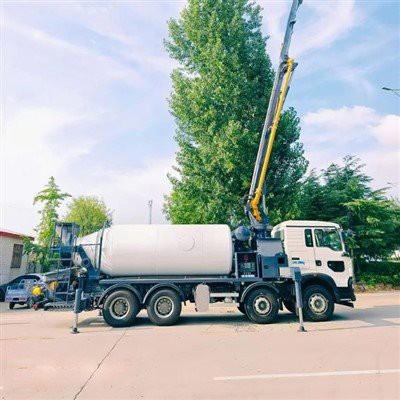
If you’re in the market for a concrete pump truck, or you need to upgrade your current equipment, the safety of your crew and your job site should be your top priority. We can help you pick a model that fits your job site size, and walk your team through a full safety training session tailored to your work. Reach out to our team to talk through your needs, ask questions about equipment specs, or schedule a demo. Your crew doesn’t have to take risks — let’s get you the right pump truck and the support to keep everyone safe.
Cement Mixer Truck References
OSHA. (2022). Crane and Derrick Safety Standards. Occupational Safety and Health Administration.
American Concrete Pumpers Association. (2021). Concrete Pump Operator Safety Manual.
National Institute for Occupational Safety and Health. (2020). Construction Safety: Hazards of Heavy Equipment Operation.
Shandong Fuxin Automobile Technology Co., Ltd.
We’re well-known as one of the leading concrete pump truck manufacturers and suppliers in China, featured by quality products and good price. Please rest assured to buy advanced concrete pump truck made in China here from our factory. Contact us for more details.
Address: West of Nanshou Road, Beihai Road, Weifang City, Shandong Province
E-mail: h17616861003@gmail.com
WebSite: https://www.fuxinautomobile.com/
