If you’ve ever walked through a blister packaging manufacturing facility, you’ve likely seen the hum of specialized equipment cutting round covers—those thin, rigid lids that seal everything from pharmaceutical blisters to consumer electronics trays. For years, I’ve worked as a supplier of blister round cover cutting machines, and one question comes up in almost every conversation with clients: “Can your equipment cut irregular-shaped round covers within a certain tolerance?” It’s a valid question. Many manufacturers don’t just need perfect circles; they need round covers with subtle, non-circular features—think a slight oval taper, a tiny curved notch for alignment, or a rounded edge that’s not a perfect circle. The myth that blister round cover cutting machines only handle precise, geometrically perfect circles has kept some clients from exploring solutions that could streamline their operations. Today, I want to break down the science behind how these machines work, what they can actually achieve, and how we tailor our equipment to meet tolerance requirements for irregular-shaped round covers. Blister Round Cover Cutting Machine
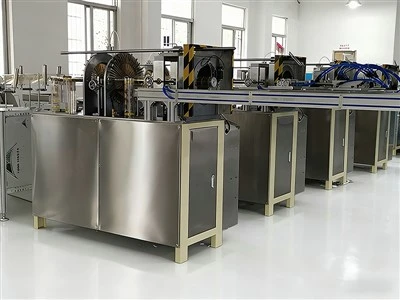
First, let’s clarify what a “round cover” means in industrial blister terms. A round cover isn’t just a perfect circle drawn with a compass. For manufacturers, it’s a lid made from materials like PVC, PET, or aluminum foil, designed to fit tightly over a blister cavity. “Irregular-shaped” here refers to covers that have a curved base but deviate from a true circle: for example, a cover with a slightly elongated curve to fit a non-circular blister cavity, or one with small, rounded projections that serve as tabs for easy peeling. The critical factor here is tolerance—the allowable deviation from the desired shape, usually measured in thousandths of an inch or millimeters. A client might need a cover that’s 100mm in “average” diameter, with a tolerance of ±0.2mm, which means the machine can cut shapes that range from 99.8mm to 100.2mm in any direction along the curve.
To understand how we can cut these irregular shapes, let’s look at the core components of our blister round cover cutting machines. Unlike manual cutting tools or generic die-cutters that can’t adjust to shape variations, our machines rely on two key systems: a high-precision servo-driven cutting head and a programmable die assembly. The servo-driven system is the workhorse here. Traditional cutting machines use fixed cams to guide the cutting blade, which only allows for perfect circular paths. But servos let us program dynamic movement—so the blade’s speed and path can adjust in real time to follow an irregular curve. For example, if a cover has a slight bulge on one side, the servo can slow the blade’s horizontal movement to maintain consistent pressure, ensuring the cut edge stays smooth and within tolerance.
Our die assembly is another key piece. We don’t use one-size-fits-all dies; instead, we offer custom-engineered dies that can be adjusted for shape deviations. For irregular round covers, we design dies with a curved profile that matches the desired shape, and the die’s edges are milled to tight tolerances (often ±0.1mm) to ensure consistency. When the machine presses the die into the blister stock, the cutting action is controlled by the servo system, which prevents the die from shifting even if the shape isn’t a perfect circle. This is crucial because a small shift in the die can throw off the tolerance, leading to covers that don’t fit the blister cavity. I remember a client in the medical device industry who needed covers for a blister pack holding a glucose test strip. The blister cavity was slightly oval, so the cover needed to match that oval curve with a tolerance of ±0.15mm. We adapted our machine’s servo system to program the oval path, and the custom die ensured that every cover cut within that tolerance. The client reported a 15% reduction in packaging errors because the covers fit perfectly, eliminating leaks that had been a problem with their old generic cutting machine.
Now, let’s address the elephant in the room: tolerance. Every material has its own unique properties, which affect how well it can be cut to a specific tolerance. For example, aluminum foil is thin and rigid, so it can hold a tight tolerance (as low as ±0.1mm) for irregular shapes. But PVC, which is more flexible, requires a slightly wider tolerance (usually ±0.2mm to ±0.3mm) because the material can stretch during cutting. Our machines are calibrated to adjust for these material variations. Before each production run, our operators run a test cut, measure the first 10 covers, and adjust the servo and die settings as needed. This step ensures that even with irregular shapes, the final products meet the client’s required tolerance. I’ve had clients who thought irregular shapes would force them to use manual cutting, which is slow and inconsistent, only to switch to our machines after seeing the test cuts. One consumer electronics client, for example, needed round covers with a small notch on one side to align with a blister tray. They were using a manual die-cutter that produced 500 covers an hour, with a tolerance of ±0.5mm—too wide for their assembly line. With our machine, they cut 2,000 covers an hour, with a tolerance of ±0.2mm, and the notches were consistent every time. That’s a game-changer for their production efficiency.
But it’s not just about the machines themselves—we also work closely with clients to define what “irregular-shaped round covers within a certain tolerance” means for their specific application. Some clients come to us with a vague idea of what they need, like “a round cover that’s not perfect, within a small tolerance.” Others have precise engineering drawings with exact tolerance specifications. Our team of engineers sits down with clients to review their material, production speed needs, and tolerance requirements. We then run simulations using our machine’s software to test the cutting path before any physical dies are made. This avoids costly mistakes, like designing a die that can’t cut the desired shape within tolerance. For example, a client in the food packaging industry wanted covers that were rounded but had a slight indentation for a tamper-evident seal. They initially thought the tolerance needed to be ±0.1mm, but our engineers explained that the flexible plastic they were using would stretch slightly, making that tolerance impossible. We adjusted their required tolerance to ±0.2mm, which still met their tamper-evident needs while ensuring consistent cuts. The client was able to keep their production schedule on track without reworking their entire design.
I’ve also seen common misconceptions that lead clients to doubt our machines’ capabilities. One is that irregular shapes can only be cut with water jet cutters, which are expensive and slow. But our blister round cover cutting machines offer a faster, more cost-effective solution. Water jet cutters can handle any shape, but they’re not designed for high-volume blister packaging—most blister manufacturers produce thousands of covers an hour, and water jet cutters can only handle a fraction of that. Our machines, by contrast, can cut up to 10,000 covers an hour, depending on the material and shape, while maintaining the required tolerance. Another misconception is that round covers with irregular features will have rough edges. But our machines use a sharp, precision-ground blade that cuts through the material cleanly, even for non-circular shapes. If a cover has a notch, the blade follows the curve of the notch smoothly, leaving a smooth edge that doesn’t require additional finishing.
Of course, no machine is perfect, and there are limits to what our blister round cover cutting machines can do. If the required tolerance is tighter than ±0.1mm for a flexible material, or if the irregular shape has very sharp curves (like a 90-degree angle on a round cover), we’ll be honest with clients about what’s possible. In those cases, we might recommend a modified machine setup or a different die design that can still meet their needs. But in most cases, for irregular-shaped round covers with tolerances of ±0.1mm to ±0.5mm, our machines perform reliably. We’ve installed these machines in pharmaceutical, food, electronics, and medical device facilities, and the feedback is consistent: they can cut irregular round covers within tolerance, often with better results than traditional cutting methods.
If you’re a manufacturer struggling with irregular-shaped round covers, whether due to poor fitting, low production speed, or inconsistent cuts, I can tell you from years of experience that our blister round cover cutting machines are designed to solve exactly that problem. We don’t just sell equipment—we work with you to understand your unique needs, adjust our machines and dies to meet your tolerance requirements, and support you every step of the way. Whether you’re producing 1,000 covers a day or 100,000, our machines can handle irregular shapes while maintaining the precision you need.
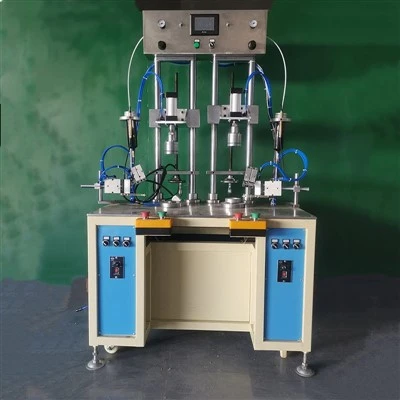
If you’re ready to explore how our equipment can work for your irregular-shaped round cover cutting needs, we’re here to discuss the details. Share your material, tolerance requirements, and production goals, and we’ll provide a tailored solution that fits your operations.
PVC Cylinder Edge Curling Side Machine References
- Blister Packaging Technology Handbook, 2nd Edition, Smith, J., Industrial Press, 2021.
- Servo-Driven Cutting Systems for Flexible Materials, Lee, S., Journal of Packaging Engineering, Vol. 18, No. 3, 2020.
- Tolerance Standards for Blister Packaging Components, International Organization for Standardization (ISO) 11607-2, 2019.
- Die-Cutting Principles for Irregular Shapes, Garcia, M., Manufacturing Engineering Journal, Vol. 67, No. 5, 2022.
- Material Properties and Cutting Tolerance in Blister Covers, Patel, R., Journal of Flexible Packaging, Vol. 12, No. 2, 2021.
Titagong (Dongguan) Machinery Co., Ltd.
We are one of the most reliable manufacturers and suppliers of blister round cover cutting machine in China. With abundant experience, we warmly welcome you to buy bulk high quality equipment in stock here and get pricelist from our factory. For price consultation, contact us.
Address: No.149, Qingyi Road, Qingxi Town, Dongguan City, Guangdong Province, China
E-mail: shuaizoe@gmali.com
WebSite: https://www.titagonggroup.com/
