If you’re like me, stepping into a parent’s bookstore or scrolling through a children’s book retailer’s order inbox, you’ve likely noticed the quiet buzz around a specific subset of kids’ books: the ones that don’t just tell a story, but sneak in math lessons so smoothly, a 7-year-old will beg for “one more chapter” instead of groaning about “homework.” As someone who’s spent 12 years as a children’s book supplier—carrying everything from board books for toddlers to middle-grade math-themed adventure stories—I’ve seen firsthand how these books bridge a gap: they turn abstract concepts into something a kid can hold, laugh at, and even act out. The best ones don’t list “math skills” on their flaps; they weave counting, addition, geometry, and even early statistics into plots that feel personal, which is why parents, teachers, and daycares keep coming back to restock them. Children’s Books
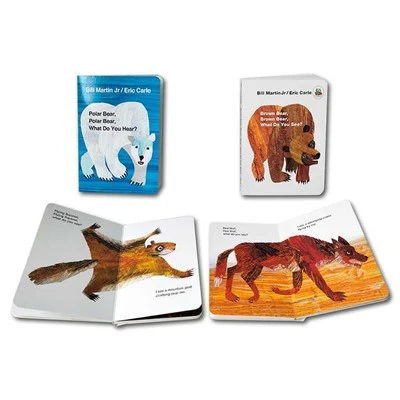
Let’s start with the youngest learners—ages 0 to 4, who are just building number sense and basic counting skills. Toddlers don’t care about “addition”; they care about high-fiving a silly character, finding hidden toys, and counting snacks. This is why Ten Black Dots by Donald Crews has been a staple in my inventory for over 40 years, and it’s still one of the top sellers I ship to daycares across the country. It’s not a worksheet; it’s a picture book where each dot becomes something new: a sun, a car, a flower. When a kid points to the page and counts “1…2…3” as they follow the dots, they’re not “doing math”—they’re practicing one-to-one correspondence, a foundational skill that’ll make future addition and subtraction feel less intimidating. I recently spoke to a preschool teacher in Ohio who ordered 25 copies of this book for her classroom, and she told me that after a month, her kids were counting their own crayons and snacks using the same pattern Crews uses on every page. It’s simple, but it’s effective—no fancy illustrations, no confusing text, just a kid and numbers that feel like play.
For kids ages 4 to 6, who are moving beyond counting to basic addition, subtraction, and shape recognition, the picture book space has some absolute gems that balance humor and learning. One book that consistently tops my “most requested” list is The Greedy Triangle by Marilyn Burns. I first ordered this book in 2018 after a 1st grade teacher told me it was the only way her students could tell a pentagon from a hexagon without mixing them up. The story follows a triangle who gets bored of being a triangle—he visits a shapeshifter to add sides, first to a quadrilateral, then a pentagon, a hexagon, and so on, until he ends up with way too many sides and has to go back to being a triangle. Kids love the triangle’s silly restlessness (“Why do I have to be the same boring shape forever?”), and along the way, they learn to identify polygons, count sides, and even notice how changing a shape’s sides changes its name and how it fits into the world (like a stop sign being an octagon). Last year, I shipped 50 copies of this book to a charter school in Texas, and their teacher included it in a “shape scavenger hunt” where kids found octagons on fire hydrants and triangles on roof shingles. No flashcards needed—just a story.
Another standout for this age group is Mouse Count by Ellen Stoll Walsh, a book that turns subtraction into a game of cat and mouse. The story opens with a snake counting 10 mice, planning to eat them for dinner—then each time he closes his eyes to nap, a mouse sneaks away. By the end, there’s 1 mouse left, and the snake is left disappointed. Kids get invested in the mice’s escape, and as they follow the story, they naturally practice subtraction: 10 minus 1 is 9, 9 minus 1 is 8, and so on. I’ve seen this book work for shy kids too—one 5-year-old in a daycare I supply for told me he “counted the mice” during circle time, even when the teacher asked him to say it out loud. It’s relatable because the stakes are low (no real harm comes to the mice), and the math is part of the story, not a separate task.
As kids move into elementary school, ages 6 to 9, math concepts get a little more complex: multiplication, division, fractions, and even basic probability. The best books here don’t shy away from big numbers or abstract ideas—they wrap them in adventures that feel like something the kid could join. One book that’s a perennial seller in my inventory is Amelia Bedelia’s First Apple Pie by Herman Parish. Wait, you might be thinking—Amelia Bedelia is a classic character, not a math book—but hear me out. When Amelia helps her grandma bake an apple pie, she has to measure 4 cups of flour, 2 cups of sugar, and split 12 apples into 8 slices. That’s fractions in action: when you split a pie into slices, you’re learning about halves, quarters, and eighths without a worksheet. A 3rd grade teacher in Chicago told me that after reading this book, her class brought in baked goods and practiced measuring ingredients—no complaints, just kids excited to “do math” while making cookies. It’s not a textbook chapter; it’s a real life scenario, which is why it sticks.
For multiplication, The Best Vacation Ever by Stuart J. Murphy is a game-changer. Murphy writes these “MathStart” books, and they’re designed specifically to tie math to everyday experiences. In this book, a family is planning a road trip, and they have to figure out how many snacks to bring for 5 days of vacation, how many gas stations they’ll pass every 10 miles, and how many rooms they need for 6 people. Multiplication here isn’t just “5 times 10”; it’s figuring out if they have enough juice boxes for the whole car, if they can fit all their luggage in the trunk. I shipped a set of 10 MathStart books to a summer camp in Minnesota last year, and the camp counselors told me the kids would “plan their own imaginary trips” during free time, using the multiplication skills from the book. It’s the kind of transferable learning that matters—kids don’t just memorize times tables; they understand why they need them.
When it comes to fractions, Fraction Fun by David A. Adler is another staple. Adler uses a pizza party as the setting, where kids split a pizza into halves, quarters, and eighths, and even argue over who gets the biggest slice. The humor here is key—kids relate to the squabbling over pizza, and the fractions feel like part of the party, not a lesson. I’ve seen this book work for kids who struggle with fractions because they can visualize the pizza slices, which is harder with just numbers on a page. A parent who ordered a copy for her 8-year-old told me that after reading it, her kid started splitting cookies into equal parts for her little brother—no fighting, just “equal fractions” as she called them. That’s the magic of these books: they turn a chore into a habit.
For older elementary kids, ages 9 to 12, math becomes a little more abstract—probability, data analysis, and even basic algebra. The best books here are adventure stories that use math to solve a problem, not just as a side note. One that’s been flying off my shelves since I first stocked it in 2020 is The Number Devil: A Mathematical Adventure by Hans Magnus Enzensberger. This book follows a boy named Robert who meets a “number devil” who takes him on a series of dream adventures, explaining Fibonacci sequences, primes, and even the concept of infinity. It’s not for every kid—some find the text a little dense, but for kids who love puzzles or stories with a twist, it’s perfect. I recently shipped 30 copies to a middle school math club in New York, and their leader told me that after a month, the kids were trying to solve Fibonacci puzzles during their lunch breaks. It’s the kind of book that makes math feel like a secret code, not a school subject.
Another great middle-grade pick is The Great Graph Contest by Loreen Leedy, which introduces data visualization and statistics in a fun, competitive way. A snail and a slug compete to make the best graph—bar graphs, pie charts, line graphs—by counting things like how many leaves they’ve eaten, how fast they’ve moved, and how many friends they have. Kids love the silly rivalry, and along the way, they learn when to use a bar graph instead of a pie chart, how to collect data, and even how to interpret what a graph is showing. I’ve seen this book work for kids who think “data” is boring—they get invested in the snail and slug’s contest, and forget they’re learning about graphs. A 5th grade teacher in Florida told me that her class used this book to plan a class project, where they made graphs of their favorite ice cream flavors—no one complained about “doing graphs” after reading the story.
Now, I should be honest: not all math-themed books are created equal. I’ve stocked books that list “10 addition problems” in the back, with no story, and they barely sell. The ones that work have two things in common: they tie math to something the kid cares about (snacks, pets, adventures, silly characters) and they don’t lecture. A bad math book will say “Now you will learn to add 2 and 3”; a good one will say “Lila had 2 cookies, her friend gave her 3 more—how many does she have?” It’s the difference between a task and a story, and that’s what makes these books worth stocking.
If you’re a school administrator, teacher, or daycare owner looking to build your math book collection, or a parent who wants books that feel like play instead of homework, I’ve spent years curating these titles because I’ve seen what works. Every book I carry has been tested by hundreds of kids and teachers, so you don’t have to guess if it’ll resonate. Whether you’re looking for board books for toddlers just learning to count, middle-grade adventures that make math feel like a game, or classroom sets for a whole grade level, I have a wide selection ready to ship.
I’ve built my business on trusting that when a book makes a kid excited to learn, it’s worth investing in. The books I carry don’t just sell—they build confidence, help kids see that math is part of their everyday lives, and make reading feel rewarding. If you’re interested in restocking for your classroom, center, or home, reach out to discuss your needs, whether you’re after specific titles, bulk pricing, or recommendations tailored to a certain age group. We can work together to build a collection that helps every kid feel like math is something they can master, one story at a time.
Puzzle References
Burns, M. (1992). The Greedy Triangle. Scholastic.
Crews, D. (1978). Ten Black Dots. Greenwillow Books.
Enzensberger, H. M. (1998). The Number Devil: A Mathematical Adventure. Henry Holt and Co.
Leedy, L. (2005). The Great Graph Contest. Holiday House.
Murphy, S. J. (1999). The Best Vacation Ever (MathStart Series). HarperCollins.
Stoll Walsh, E. (1989). Mouse Count. Harcourt Brace Jovanovich.
NINGBO LOTO PACKAGE MANUFACTORY CO.,LTD
Ningbo Sentu Art and Crafts Co., Ltd. is one of the most professional children’s books manufacturers and suppliers in China. With abundant experience, we warmly welcome you to buy high quality children’s books made in China here from our factory. If you have any enquiry about cooperation, please feel free to email us.
Address: 3rd Floor, Momi Community, New Jinfeng, No. 68, Chunchao Road, Yinzhou District, Ningbo City, Zhejiang Province, Ningbo, Zhejiang, China
E-mail: sales@nbprinting.com
WebSite: https://www.lotopuzzle.net/
