If you work with industrial equipment, you’ve probably heard the term “choke” thrown around when talking about centrifugal air compressors. Let me break it down straight: choke isn’t like the physical blockage that clogs a pipe—for centrifugal compressors, it’s a performance limit, a point where the machine can’t keep up with the demand it’s pushing for, and it starts to act wonky. As a centrifugal air compressor supplier, I’ve seen way too many clients panic when their compressor chokes, thinking it’s a total breakdown. The good news is most choke issues are preventable or fixable without a full replacement. Let’s walk through what causes choke, how to spot it, and what you can do to get your compressor back on track. Centrifugal Air Compressor

First, let’s get clear on what choke actually is for centrifugal units. Unlike reciprocating compressors that use pistons to build pressure, centrifugal ones use a spinning impeller to accelerate air, then a diffuser to slow that air down and turn that speed into pressure. That whole process only works if the flow of air stays balanced. Choke happens when you push the compressor to move air at a rate that’s too high for its design—beyond the sweet spot where the impeller and diffuser work together. When that occurs, the air flow through the compressor becomes unstable, the pressure head drops off suddenly, and you start noticing all kinds of weird symptoms. It’s not a part failure 9 times out of 10; it’s the compressor hitting its aerodynamic limit.
A lot of people mix up choke with surge, another common compressor issue, but they’re totally different. Surge is when flow is too low, backpressure builds up, and air reverses through the machine, causing vibration and noise that can damage parts over time. Choke is the opposite: flow is too high, so the air molecules can’t move through the impeller and diffuser smoothly. If you’re running your compressor near full load 24/7, you’re way more likely to hit choke than if you keep it within a reasonable load range. I’ve had small manufacturing clients call me at 2 a.m. because their main compressor was throwing an error code, and half the time it’s because they cranked up the output to run extra machinery for a big order—they didn’t realize that was pushing the compressor past its limit.
So, how do you spot choke before it becomes a headache? Let’s talk about the red flags. The most obvious one is a sudden drop in discharge pressure. You might notice your pressure gauge was holding steady at 125 PSI, then it dips to 90 PSI out of nowhere, even though you didn’t adjust any settings. Another sign is higher energy consumption: if your electric bill jumps 10-15% for no reason, the compressor might be working harder to push too much air, wasting power instead of doing useful work. Vibration is a big one too—choke causes the impeller to “chatter” a little, so you’ll feel more shake than usual on the compressor skid, and might hear a high-pitched whine instead of the steady hum you’re used to. Some modern compressors have built-in sensors that flag choke, but if yours is older, you’ll have to keep an eye on those pressure and flow metrics.
Now, let’s get to the part you actually care about: how to deal with choke when it hits, and how to stop it from coming back. Let’s start with immediate fixes if your compressor chokes right now. The first thing to do is back off on the load. If you’re using a variable speed drive (VSD) model, dial the speed down by 10-15% to reduce the air flow demand. If it’s a fixed-speed unit, you can either reduce the number of tools/machines running at once or open the discharge valve slightly to let excess air escape—this brings the flow rate back within the compressor’s design range. I’ve seen clients try to cram more demand without adjusting, and that leads to more wear on the impeller and diffuser, which makes choke happen more often.
If the choke is happening regularly, you might need to tweak your system’s layout a little. A lot of industrial facilities have multiple end-users spread out, and the piping is too small or has too many bends, which creates pressure drops. When the compressor has to work harder to push air through narrow pipes, it hits choke faster. Upgrading your main discharge piping to match the compressor’s rated flow can fix that—we’ve done a bunch of retrofits for clients where adding a larger header pipe eliminated 90% of their choke issues. Also, making sure there are no leaks in your air lines is key: even a small pinhole leak can make the compressor run at higher flow to compensate, pushing it past its limit. I tell every client to do a quarterly leak check with soapy water—bubbles mean a leak, and fixing those cuts your load, reduces energy use, and prevents choke.
Another common cause of choke is wrong inlet air conditions. Centrifugal compressors are designed for a specific inlet temperature and pressure. If your inlet air is too hot, the air is less dense, so you need more mass flow to get the same pressure—this pushes the compressor past its design limit. For example, if you’re in a factory where the inlet air is 100°F instead of the standard 68°F, your compressor’s rated flow drops by about 7%. Installing an inlet air cooler (or just making sure your compressor is in a cool, well-ventilated space, not right next to a furnace or a hot exhaust fan) can fix that. Similarly, if the inlet has a dirty filter, it creates a pressure drop too, making the compressor work harder. Changing your inlet filter every 2-3 months (or as recommended by the supplier) is a cheap, easy fix that prevents so many compressor issues, including choke.
Wait, what if you’ve tried all these and choke is still happening? That might mean your compressor is undersized for your current demand. I see this a lot with growing businesses: they start with a 100 CFM compressor, add a new packaging line that needs 50 CFM, and suddenly they’re running at 150 CFM, which is way above the original unit’s rating. When you’re choosing a centrifugal compressor, you should leave 15-20% of headroom for future growth—no one wants to upgrade a whole compressor every time they add a machine. If your operation has expanded past your current unit’s capacity, it’s time to look at a larger compressor, or even add a second one to share the load. We’ve worked with clients who tried to run an undersized compressor for 2 years, and the choke ended up damaging the impeller so bad they had to replace it anyway—costing way more than just getting the right size unit upfront.
Let’s also talk about maintenance to prevent choke long-term. A lot of people only service their compressors when something breaks, but regular checks catch issues before they lead to choke. Every 6 months, have a certified tech inspect the impeller and diffuser for damage or buildup. Over time, dust and debris can build up on the impeller blades, changing their aerodynamic shape—this makes the compressor less efficient and more likely to choke. If buildup is bad, we can do a chemical cleaning or rebalance the impeller, which is way cheaper than replacing parts. Also, calibrate your pressure and flow sensors annually—if a sensor is reading wrong, you might think you’re running at 100 CFM when you’re actually at 120, leading you to run the compressor too hard.
I should also mention the role of system controls. If your compressor is running on a simple on/off control, it will either run at full load or off, which means it’s constantly cycling and hitting full load, leading to more choke events. Variable speed drive (VSD) controls, which adjust the compressor’s speed to match the demand, are way better for preventing this. A VSD compressor will slow down when demand is low, keeping the flow within the sweet spot, and speed up when you need more air, without pushing past the limit. I recommend VSD models for almost all industrial applications, especially those with variable demand. We’ve had clients switch from fixed-speed to VSD and cut their choke incidents by 80% right away.
Let me share a quick real example to make this concrete. Last year, a client in the textile industry called me saying their compressor was choking every time they ran two loom lines at once. They had a fixed-speed 150 CFM compressor, and when both looms ran, they needed 145 CFM—right at the edge of the compressor’s limit. We checked their piping and found their main discharge line was 2 inches too small, causing a 10 PSI drop. We upsized the piping, added a VSD control, and adjusted their load to keep flow at 130 CFM when both looms ran. After that, they didn’t have a single choke issue for the next 18 months, and their energy use dropped by 12%. That’s the kind of fix that makes all the difference—small changes, not a whole new compressor.
What about when you can’t reduce flow because your operation needs that much air? In that case, you might need to look at a compressor with a higher rating, or one with a wider operating range. Some centrifugal compressors are designed with a larger choke margin, meaning they can handle higher flow without hitting the limit. When you’re working with a supplier, make sure to give them your current and projected peak demand, so they can recommend a unit that’s sized right. Don’t just go for the cheapest option—an undersized compressor will cost you more in repairs and energy over time.
I also want to address a common myth: some people think choke means the compressor is failing, so they should just replace it. That’s not true at all. Most choke is a system issue, not a compressor issue. For example, if your pipe is too small, the problem is the pipe, not the compressor. If your inlet filter is dirty, the problem is the filter, not the compressor. Only in rare cases—like if the impeller is bent or eroded from years of buildup—do you need to repair or replace a part. That’s why working with a supplier that does system audits is so helpful: we can come to your facility, check your piping, your load, your inlet conditions, and figure out exactly where the choke is coming from, instead of just selling you a new compressor.
Let’s wrap this up with the key takeaways. Choke in a centrifugal air compressor is all about too much flow for the unit’s design, not a part failure. You can spot it by sudden pressure drops, higher energy bills, and increased vibration. Immediate fixes include reducing load, adjusting settings, or checking for leaks. Long-term fixes involve upgrading piping, keeping filters clean, using VSD controls, and making sure your compressor is sized right for your demand. Regular maintenance is the best way to prevent choke from turning into a big problem.
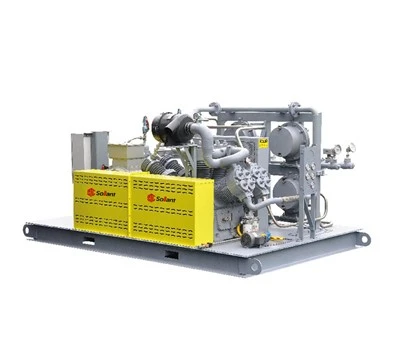
If you’re dealing with regular choke on your centrifugal air compressor and want to get to the bottom of it, don’t hesitate to reach out to discuss your needs. We can help you run a quick system check, identify the root cause of the choke, and find a solution that works for your operation—whether that’s a small tweak to your piping, a filter change, or recommending the right size compressor if you’ve outgrown your current unit.
High Pressure Breathing Air Compressor References
- Boyce, M. P. (2003). Centrifugal Compressors: Design and Practice. ASME Press.
- Department of Energy. (2016). Air Compressor Systems: Best Practices for Industry. U.S. Department of Energy, Energy Efficiency and Renewable Energy.
- API Standard 617. (2020). Centrifugal Compressors for General Petroleum, Chemical, and Gas Industry Services. American Petroleum Institute.
- Gas Turbine Laboratories, Texas A&M University. (2019). Aerodynamic Instabilities in Centrifugal Compressors: Surge, Stall, and Choke.
Shanghai Sollant Energy Saving Technology Co., Ltd.
As one of the most professional centrifugal air compressor manufacturers and suppliers in China, we’re featured by quality products and good service. Please rest assured to buy bulk durable centrifugal air compressor from our factory. Welcome to view our website for more information.
Address: No.215, Songri Center, Beihongqiao, Jiading District, Shanghai, China.
E-mail: info3@sollant.com
WebSite: https://www.sollant-gas.com/
