Hey there! I’m a supplier of temperature sensors, and I often get asked if wireless temperature sensors can be used in hard-to-reach areas. Well, let me tell you, it’s a question that hits close to home because I see the real-world challenges our customers face when they’re dealing with these tricky spots. Temperature Sensor

First off, what are hard-to-reach areas? We’re talking about places that are difficult for humans to access on a regular basis. It could be deep inside industrial machinery, high up in a storage silo, or even buried underground in a pipeline monitoring system. These areas pose unique problems when it comes to temperature monitoring. Traditional wired sensors are out of the question in many of these scenarios. Stringing wires to these places is not only time-consuming and expensive but also prone to damage over time.
Now, let’s talk about why wireless temperature sensors are a game-changer here. One of the biggest advantages is their flexibility. You can place them pretty much anywhere without the hassle of running cables. For example, in an old-fashioned factory with a maze of gears and motors, getting a wired sensor to a key component deep inside can be a nightmare. With a wireless sensor, you just pop it in place, and you’re good to go. It’s like having a secret agent that can sneak into the hard-to-reach spots and report back the temperature data.
Another great thing about wireless sensors is that they can transmit data over long distances. Thanks to technologies like LoRaWAN (Long Range Wide Area Network), ZigBee, and Bluetooth Low Energy (BLE), these sensors can send temperature readings to a central monitoring station from quite far away. In a large agricultural storage facility with multiple silos spread out across a big area, you can have wireless sensors in each silo, all sending data wirelessly to a control room. This means you don’t have to physically visit each silo to check the temperature.
But it’s not all smooth sailing. There are some challenges when using wireless temperature sensors in hard-to-reach areas. One issue is power. Since these sensors are often in places where it’s difficult to replace batteries, they need to be energy-efficient. We’ve invested a lot of time in developing sensors that can last for months, or even years, on a single set of batteries. For instance, our latest models use advanced low-power microcontrollers and optimized radio modules to minimize energy consumption.
Signal interference is another concern. In some industrial environments, there are a lot of electromagnetic fields that can disrupt the wireless signal. We’ve tackled this by using frequency-hopping spread spectrum (FHSS) technology. This makes the sensor’s signal jump around different frequencies, reducing the chances of interference. It’s like a smart driver who changes lanes on a busy road to avoid traffic jams.
The accuracy of the sensors is also crucial. In hard-to-reach areas, you can’t just go and check the readings manually all the time. That’s why we’ve designed our sensors to be highly accurate. We use high-quality temperature sensors and advanced calibration techniques to ensure that the data you get is as reliable as possible.
Let me share a real – world example. A food processing plant had a problem with monitoring the temperature inside their large fermentation tanks. These tanks were deep, and reaching the bottom to install a wired sensor was almost impossible. They installed our wireless temperature sensors, and it made a huge difference. They could now monitor the temperature in real – time, which helped them optimize the fermentation process and improve the quality of their products.
In the oil and gas industry, wireless temperature sensors are being used to monitor pipelines buried underground. These sensors can detect any abnormal temperature changes, which could indicate a leak or a blockage. This early detection is crucial for preventing costly disasters.
So, can wireless temperature sensors be used in hard-to-reach areas? The answer is a resounding yes! With the right technology and a bit of innovation, we’ve been able to overcome many of the challenges. We’ve seen our sensors being used in all sorts of difficult places, from mines to offshore platforms.
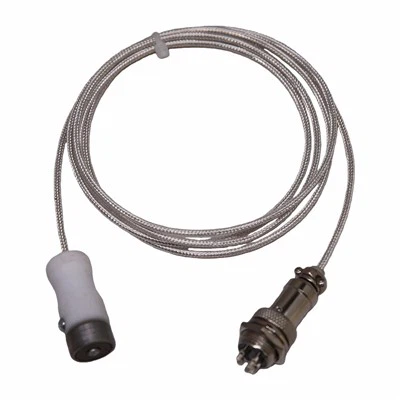
If you’re in a situation where you need to monitor temperature in hard-to-reach areas, I’d love to hear from you. We’ve got a range of wireless temperature sensors that can meet your specific needs. Whether it’s a small – scale project in a research lab or a large – scale industrial application, we’ve got the expertise and the products to help you out. Don’t hesitate to reach out and start a conversation about how we can work together to solve your temperature monitoring problems.
Resistance Temperature Detector References:
- "Wireless Sensor Networks: A Comprehensive Survey" by I. F. Akyildiz, W. Su, Y. Sankarasubramaniam, and E. Cayirci.
- "Industrial Wireless Sensor Networks: Challenges, Design Principles, and Technical Approaches" by R. Stanic, A. Kusek, and I. Khalil.
- "Low – Power Wireless Sensor Networks for Environmental Monitoring" by P. Jayawardena, Y. Liu, and C. W. Tan.
Jiangsu Zhaolong Electric Co., Ltd.
Address: No. 80, Zhangguo Chang’an Road, Dainan Town, Xinghua City, Jiangsu Province
E-mail: 180193845@qq.com
WebSite: https://www.cnzhaolong.com/
